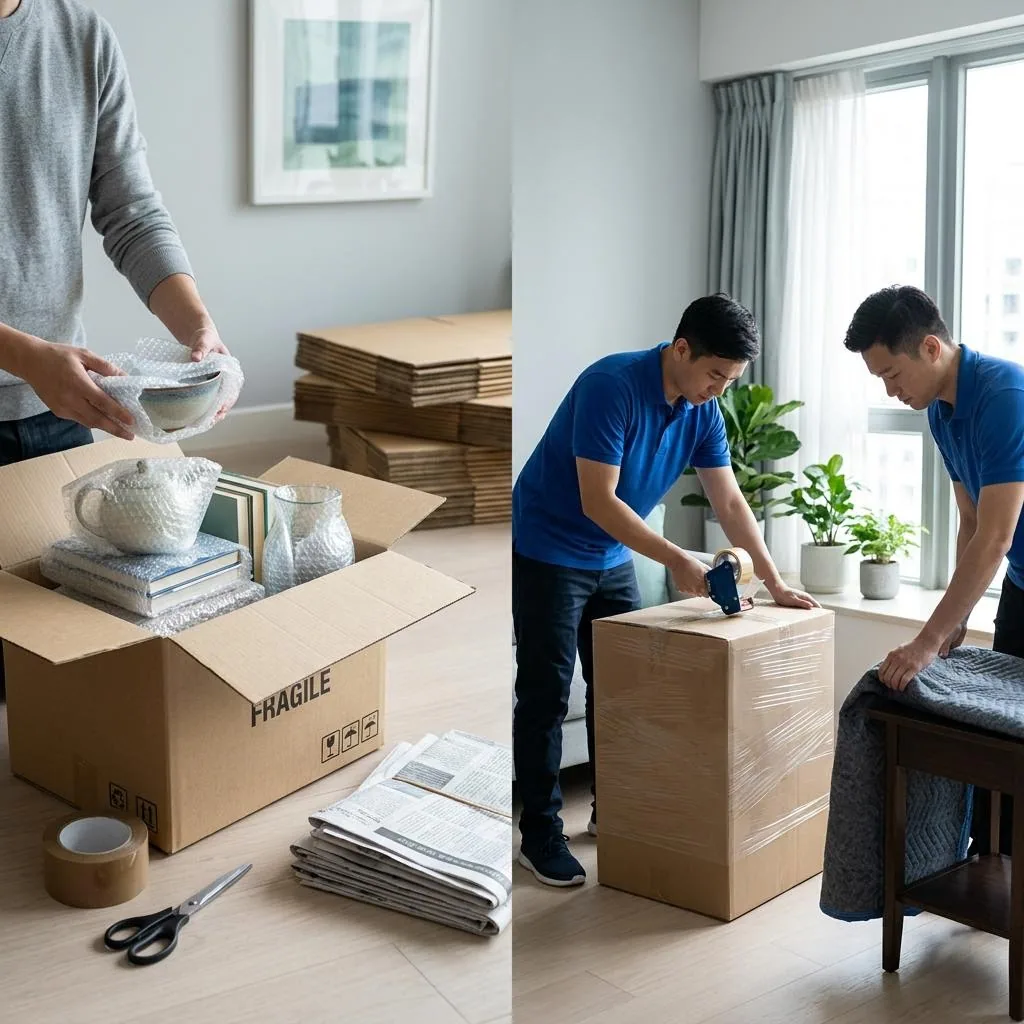
MOVING TIPS & ADVICE
Pack Your Own Boxes or Hire a Pro? How to Decide by Time, Budget, and Risk
Key answers
DIY packing can save part of the labour cost, but it still takes time, materials, and sorting effort. A professional packing service is usually a better fit when you are short on time, have many fragile items, or need to meet a tight handover schedule.
How to tell whether DIY packing really suits you
DIY packing can work if you have relatively few belongings, enough lead time, and most items are simple household goods such as clothes, books, and daily essentials. But if you are already busy with work, cleaning, handover tasks, and address changes, packing can quickly become the biggest source of stress before moving day.
Check three things first: time, item mix, and schedule. Can you set aside uninterrupted blocks to sort? Do you have many fragile, heavy, or small loose items? Is there enough time before the move? If any one of these is tight, hiring help is often the more practical choice.
The hidden costs of packing on your own
DIY packing may seem cheaper at first, but you still need to budget for boxes, tape, cushioning materials, labels, and the time spent collecting supplies. If you run short midway, last-minute purchases can disrupt your schedule and add extra hassle.
The bigger cost is often mental load. Many people do not fail because they cannot pack, but because sorting triggers delays, decisions, and rechecking. If you are also caring for children, older family members, or juggling work, the time pressure can outweigh the savings.
Items better handled by experienced packers
Fragile tableware, glassware, light fittings, picture frames, ornaments, collectibles, and heavy books all need different packing methods. If weight is not spread out and empty spaces are not filled properly, boxes can shift and break during transit. Mixed storage boxes and overfilled drawers are also common sources of damage.
Electrical, gas, medical, structural, or data-related disassembly and reconnection should not be done as a moving DIY task. Those jobs should be handled by qualified professionals. If a mover offers packing help, ask what is included and keep specialist technical work separate from ordinary household packing.
How professional packing usually fits into the moving process
If you choose professional help, prepare a simple room list and mark which items need priority packing and which items you still need until moving day. One or two days before the move, set aside documents, valuables, medication, and chargers so they do not get mixed into general boxes.
On arrival, ask for boxes to be grouped by room and category, such as kitchen, clothing, study, and fragile items. When the packing is finished, check the box count, room labels, and corners, and make sure nothing is left inside wardrobes, drawers, or under the bed.
How to balance budget and convenience
If you want to save money without doing everything yourself, use a mixed approach: pack the easy items yourself and leave the time-consuming or fragile items to a professional. That keeps costs under control while reducing fatigue and mistakes close to moving day.
When comparing quotes, do not look only at the total price. Ask whether on-site packing, boxes, labeling, and placement help are included. Service scope can differ from one mover to another, so request written confirmation to avoid surprises later.
Preparation tips and common mistakes to avoid
Whether you pack yourself or hire help, start with a checklist: pack seldom-used items first, then finish the daily essentials near the end. Write the room name, contents, and whether the box is fragile. Use small boxes for heavy items and larger boxes for light items so they stay manageable.
The most common mistake is mixing items from different rooms or uses into the same box, which makes unpacking harder at the new place. Another is forgetting to set aside first-night essentials such as towels, basic tableware, toiletries, and a change of clothes. Check corridors, tops of cabinets, under beds, and bathrooms again the night before the move.
Frequently Asked Questions
How do I decide between DIY packing and hiring a professional?
DIY packing can be suitable if you have fewer items, more time, and little risk of breakage. If you are busy, short on time, or dealing with many fragile items, professional help is usually the safer option.
What hidden costs should I expect if I pack by myself?
Beyond boxes and tape, you should count sorting time, extra supply runs, schedule delays, and the risk of damage if items are packed poorly.
Which items should not be packed casually?
Glassware, light fittings, collectibles, heavy books, and mixed loose items need careful packing. Electrical, gas, medical, structural, or data-related work should be left to qualified professionals.
What should I prepare before a professional packing visit?
Set aside documents, valuables, medication, and must-have items, then note which rooms need priority and how the new home is arranged.
How can I avoid a long unpacking process after moving in?
Label every box by room and content, keep daily essentials in a separate box, and make sure the most important items are easy to find on arrival.


