MOVING TIPS & ADVICE
How to Save Space When Packing Clothes for a Move: Sorting, Folding, and Wrinkle Control
Key answers
Clothes are easy to overpack and hard to unpack. Declutter first, then sort by season and use, use rolling, vacuum bags, and luggage wisely, and keep delicate items separate. Ask the mover in advance about wardrobe boxes and confirm in writing what is available.
Reduce first, then start packing
Do not rush to box up everything as soon as you open the wardrobe. Sort clothes into three groups first: keep, donate, and discard. Items that have not been worn for years, no longer fit, have pilling, yellowing, or obvious damage usually are not worth the space and effort of moving.
If clothing is stained, torn, smelly, or has broken zips, decide whether it is really worth repairing. The less you bring, the easier it is to estimate box count, keep the move organised, and avoid clutter when you unpack at the new home.
Sort by season, use, and family member
The most practical way to sort clothes is by season first, then by use, and finally by household member. Summer tops, winter coats, workwear, sportswear, and sleepwear should be packed separately, with clear labels on each box showing what is inside and who it belongs to.
Also separate items by how easily they crease. T-shirts, hoodies, and jeans can usually be rolled or folded compactly, while shirts, trousers, dresses, and suit jackets are better kept apart to reduce marks. If you need certain clothes immediately after moving, prepare a separate first-night box instead of mixing them with long-term storage items.
How to roll, fold, and pack clothes properly
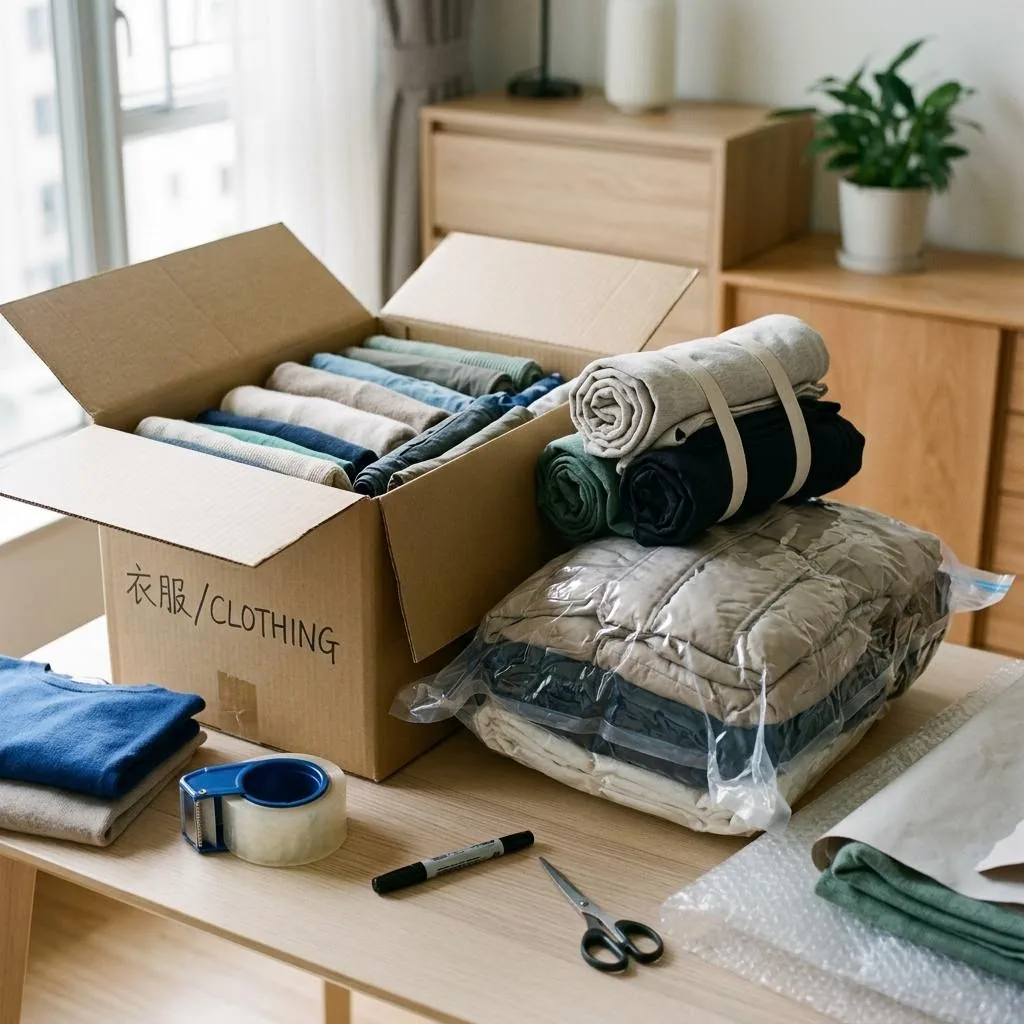
Soft items such as T-shirts, homewear, activewear, and towels usually save space when rolled into compact cylinders. When placing them in a box, start with flatter layers at the bottom and fill gaps with lighter items so the contents do not shift too much in transit.
For clothes that crease easily or need to keep their shape, use clean paper, tissue, or garment dividers instead of forcing them into tight spaces. Do not overfill boxes: too full and they may burst; too loose and the contents will move around. If the box still rattles when gently shaken, add more padding.
Vacuum bags save space, but they are not for everything
Vacuum bags are useful for bulky items such as winter coats, down jackets, heavy blankets, and thick knitwear. They can reduce volume and make it easier to divide items into boxes. Before using them, check whether the fabric can handle long compression without losing shape or texture.
Vacuum bags do not mean clothes can be packed carelessly. Everything inside should be completely dry to avoid musty smells or mildew, and the bag should be labelled clearly after sealing. Avoid placing compressed bags under heavy loads. If you are unsure, it is better to use a larger box or cloth bag than to risk deforming the clothes.
Using luggage, fabric bags, and other alternatives
Idle suitcases are ideal for heavier, denser clothes such as jeans, thick sweaters, and winter trousers. Wheels make them easier to move, but do not overpack them or the zipper and wheels may be damaged. If the contents are prone to creasing, add a thin cloth layer or garment bag for protection.
Thick nylon bags, reusable tote bags, and some transparent storage bags can work for lighter clothes or bedding accessories. However, they are easier to squash, so place them in stable positions in the truck and keep sharp or rigid items away. If a bag is not strong enough, do not force heavy clothes into it just to save space.
What to confirm before and after moving day
If you have many suits, dresses, or long coats, ask the mover in advance whether wardrobe boxes are available, what sizes they are, and how they should be packed. Request written confirmation. If you have valuable or especially delicate clothing, explain this early so an appropriate packing method can be arranged, but do not assume every mover uses the same setup.
When you arrive, check the outer labels, look for dampness, and make sure zippers or seals have stayed closed. Unpack your first-night clothes first. If you find odour, creases, or damaged packaging, take photos and raise it with the mover right away; cleaning, pressing, and repairs should be handled separately according to the fabric type.
Frequently Asked Questions
Should I fold clothes or roll them before moving?
Soft everyday items such as T-shirts, homewear, and sportswear usually save space when rolled. Shirts, trousers, and wrinkle-prone pieces are safer when folded neatly or hung. The key is to separate them by fabric and use, not to pack everything the same way.
Are vacuum bags suitable for all clothes?
No. They are useful for down jackets, thick blankets, and some winter items, but not for leather, premium wool, structured suits, or fabrics that deform easily. Always check the material and make sure items are completely dry first.
Can I use a suitcase to pack clothes for a move?
Yes, especially for heavier or denser clothing. Just do not overfill it, or the zipper and wheels may be strained. Wrinkle-prone items should have an extra protective layer, and hard objects should not be packed with them.
How can I find the clothes I need on the first night?
Prepare a separate first-night box or bag with sleepwear, underwear, a change of clothes, and basic accessories. Label it clearly and keep it easy to access so it does not get mixed up with long-term storage items.
What should I do if I have many suits and long coats?
Ask the mover in advance whether wardrobe boxes are available and request written confirmation of the size and packing method. Clean and dry the garments first, keep them separated by length or use, and hang them up as soon as possible after arrival to reduce creasing.


