MOVING TIPS & ADVICE
Clothing Packing for a Move: How to Use Garment Boxes and Vacuum Bags
Key answers
When moving clothes, garment boxes work best for suits, coats, and wrinkle-prone items, while vacuum bags are better for bulky bedding and some seasonal soft goods. Sort by fabric, bulk, and crease risk first, then choose the right method instead of packing everything the same way.
Sort clothes by fabric and crease risk first
When packing clothes for a move, the key is not to stuff in as much as possible. First decide which items wrinkle easily, which items can be compressed, and which items simply need to stay flat. Suits, shirts, dresses, and long coats can pick up deep creases if they are pressed under heavier items, while quilts, pillows, and stuffed toys are usually bulky but less sensitive to compression.
If you separate items by type first, then choose packing methods based on moving time, whether you need to move in on the same day, and how much wardrobe space you will have at the new home, you will spend less time reorganising after arrival. Clothing packing is not only about saving space; it is also about protecting items and reducing the work needed once you unpack.
What garment boxes are good for, and where they fall short
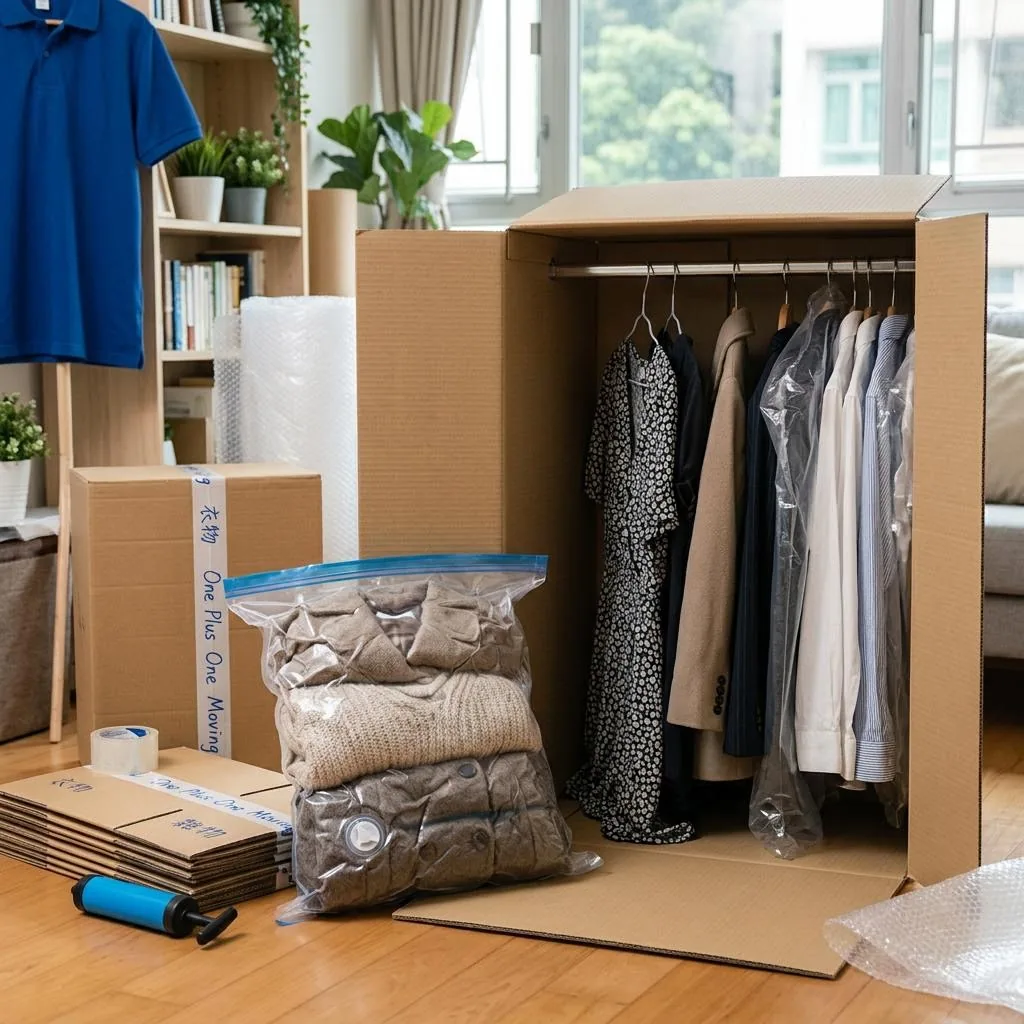
Garment boxes are best for clothes that need to stay hanging, such as suits, formalwear, shirts, trench coats, and structured outerwear. You can transfer garments directly from the wardrobe to the box on their hangers, which reduces creasing and makes it easier to hang everything back up at the new place. That is especially useful if you need to settle in quickly.
Still, garment boxes are not a solution for everything. They take up more vehicle space, and overloading them with heavy outerwear can strain the bottom or hanging bar. They work best for light, wrinkle-prone items, not for packing a large number of heavy leather jackets or thick coats. Before moving day, check the box dimensions against your wardrobe height and confirm with the mover whether the right box format is available and how it will be collected or reused.
What vacuum bags are good for, and what to avoid
Vacuum bags are useful when you need to compress volume. They are often most helpful for duvets, pillows, stuffed toys, and thick sweaters that take up a lot of room but do not need to keep a rigid shape. Once the air is removed, the number of boxes can drop significantly, and it becomes easier to load the vehicle, especially when you are moving a lot of seasonal bedding.
However, vacuum bags are not suitable for every fabric. Down, wool, silk, and items with special filling or structure may lose loft, texture, or resilience if they are over-compressed for too long. If the seal is not secure, the bag can slowly leak air during transport and expand again inside the box. If you are unsure, use a lighter compression level or pack the item flat in a regular box instead.
A mixed method is usually the most practical
In most moves, the best approach is not choosing one tool only. Match the method to the item: use garment boxes for wrinkle-prone clothing, vacuum bags for bulky bedding, and regular boxes or suitcases for T-shirts, jeans, and underwear. This protects the clothes without wasting vehicle space.
If you have a lot of clothing, list items first and group them into four categories: ready-to-wear, wrinkle-prone, compressible, and easy-to-fold. Mark each box with the room and contents, such as master bedroom, hanging clothes, or winter bedding, so you can sort everything faster after arrival and avoid moving the same items more than once.
Practical prep and common packing mistakes
Before using garment boxes, clear pockets, fasten buttons and zippers, and secure belts or loose accessories so they do not catch other clothes. Before sealing vacuum bags, make sure every item is completely dry; packing damp clothing can trap odour and encourage mould. Remove or wrap any sharp decorative parts on hangers or accessories.
Common mistakes include treating all clothes the same way, over-compressing items just to save box count, stacking heavy items on top of garment boxes, or assuming vacuum bags replace proper moisture protection. If your clothes will be stored for a few days before move-in, keep them labelled, separated, and in a dry, ventilated place. For very expensive garments or items with special care requirements, check care instructions with the retailer or a specialist cleaner before packing.
Arrival checks and what to ask the mover
After you arrive, check whether the garment boxes have been crushed and whether any vacuum bags have leaked air. Put wrinkle-prone clothing back on hangers first, then handle bedding and general items. If you notice odour, moisture, or heavy creasing, deal with those items separately before putting everything back into the wardrobe.
If you want the mover to help with clothing packing, ask in advance whether suitable box types are available, how garment boxes will be collected or reused, whether you need to pre-sort the items, and which materials should not be vacuum-compressed. If your moving schedule is tight, keep one or two boxes for the last items to be sealed so you still have clean clothes ready for immediate use on move-in day.
Frequently Asked Questions
How should garment boxes and vacuum bags be split when moving clothes?
A practical split is: suits, shirts, dresses, and long coats in garment boxes; duvets, pillows, stuffed toys, and thick bedding in vacuum bags; and T-shirts, jeans, and underwear in regular boxes or suitcases.
Which clothes should not go into vacuum bags?
Down, wool, silk, and items with special filling or structure should not be over-compressed for long periods. If you are not sure, use light compression or switch to a regular box.
Are garment boxes suitable for very heavy coats?
Not in large numbers. Garment boxes are designed to protect wrinkle-prone clothing, so too many heavy coats can strain the box bottom or hanging bar. It is better to spread heavy items out.
What is the most common problem with vacuum bags during a move?
The most common issue is a poor seal that lets air back in. That can make the bag expand and squeeze other boxes. Check the seal carefully before placing the bag into a box.
How should clothing boxes be labelled for move-in day?
Write the room, contents, and priority on the outside, for example master bedroom, shirts for immediate use, or winter bedding, vacuum bag. This helps you unpack the essentials first.


