MOVING TIPS & ADVICE
How to Move Suits and Coats by Hanging to Reduce Wrinkles and Distortion
Key answers
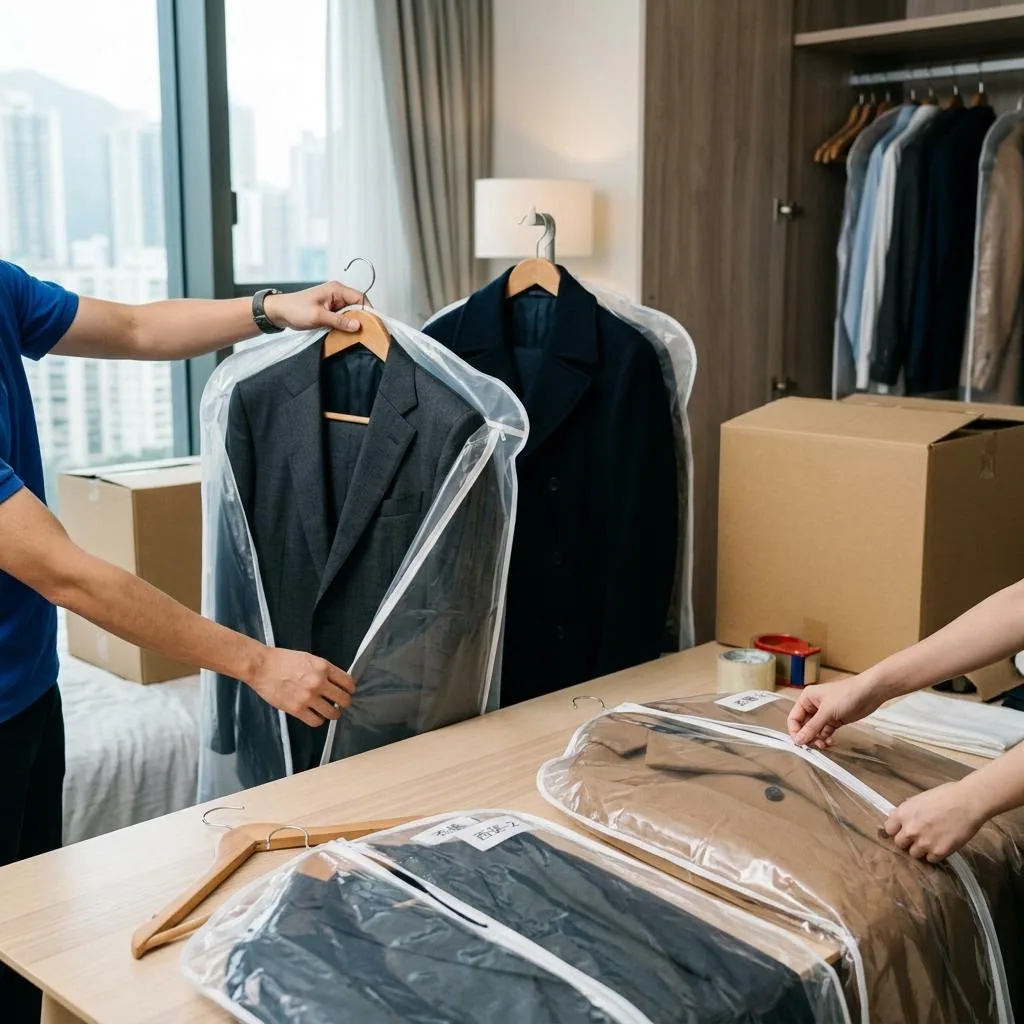
Suits, coats, and formal wear should be moved upright whenever possible to reduce creasing and shape loss. This guide explains garment boxes, temporary packing, arrival checks, and the questions to ask a mover in Hong Kong.
Why suits and coats should not be folded into standard boxes
Suits, wool coats, and formal dresses are vulnerable to pressure. Once the shoulder line, lapel, or chest structure is forced into a tight fold, the garment may not return to its original shape after the move, especially if it has padding, canvas, or a tailored cut.
Putting these items into ordinary cartons, plastic bags, or suitcases usually leads to more than light creasing. Common problems include collapsed shoulders, deep sleeve folds, and warped panels, so the safest approach is to keep them hanging upright whenever possible.
How to use a garment box properly
A garment box is designed to keep clothing upright during transport and usually has a horizontal bar for hanging rails. Before packing, check the available height so long coats do not need to be folded, and avoid overfilling the box because crowded garments will press against each other at the shoulders.
Place heavier and longer items in the middle area, balance the load from side to side, and leave enough space for the clothes to hang naturally. If the weather is humid or rainy, make sure the box is clean and dry, and label it clearly as delicate hanging clothing so it is handled in the right position.
What to do if you do not have a garment box
If you only have a small number of items, you can use a breathable garment bag and flat packing instead. For suits, one common method is to turn one shoulder inside out, tuck the other shoulder into it, and lay the jacket flat on top of the carton with a clean soft layer underneath as protection.
If coats or heavy jackets must be laid flat, keep them on the top layer and separate them from shoes, books, and kitchen items. Do not place wool, tweed, or structured jackets in vacuum bags for long periods, because over-compression can damage the fibres and lining and make the garment harder to reshape later.
Preparation before packing day
Before moving, sort your clothing by frequency of use, season, formal wear, and items that need dry cleaning. Empty all pockets first so keys, coins, badges, tie clips, and documents do not scratch the fabric or create pressure marks. If a garment is stained, it is better to clean it before packing.
Also check the hangers. Thin wire hangers and bent plastic hangers may cause the shoulders to droop, so choose a hanger with better support. If a garment has removable belts, pins, or dust covers, keep them together and note them on your checklist so you can restore each item quickly after arrival.
What to watch for on moving day and after arrival
On moving day, load the garment box later rather than leaving it in a corridor or lift lobby for a long time. If the building has a narrow lift, tight corners, or old stair access, measure the box in advance and allow enough turning space. For narrow door frames, low ceilings, or long access routes, confirm the route with the mover beforehand.
After arrival, open the box and check for dampness, pressure marks, or shifted hangers before transferring the items into the wardrobe. If you still see light creasing, let the garments hang for a while before doing anything else. Avoid using high heat immediately, and leave delicate fabrics, leather trims, or any item marked as no-high-heat to qualified cleaning or garment-care services.
What to ask a mover in advance
If you have many formal suits, evening wear, or tailored coats, ask in advance whether the mover can provide suitable garment boxes, whether you need to pack anything yourself, and how the items will be labelled and separated. It is also worth confirming building access, lift size, parking space, and loading arrangements before the move begins.
If you only have a few items, you may be able to pack them yourself. If the quantity is large or the garments are expensive, ask for written confirmation of the packing method, the moving scope, and the placement plan at the new home. For cleaning, pressing, alterations, leather care, or specialist garment treatment, use the relevant professional service separately rather than mixing it into the move.
Frequently Asked Questions
Do suits always need a garment box when moving?
Not always, but for tailored or valuable pieces, a garment box is usually better than a standard carton. If you only have a few items, a breathable garment bag and flat packing may also work, as long as the clothes are not crushed.
Can wool coats go into vacuum bags?
Long-term vacuum compression is not recommended. Wool, tweed, and structured coats can lose shape under heavy compression and may be harder to restore after unpacking.
Should I dry clean suits before the move?
It depends on the condition. If there are stains, sweat, or long periods without cleaning, it is better to deal with them beforehand. Avoid last-minute treatments that may not dry fully before packing.
How can I reduce wrinkles without a garment box?
Use a shoulder-reverse fold for jackets, place them flat with soft clean padding underneath, and keep them on the top layer of the carton. Do not place heavy items on top.
What should I do if the clothes arrive wrinkled?
Hang them up first and let gravity help the fabric relax. For delicate fabrics, leather trims, or garments with special linings, use a qualified cleaning or garment-care service instead of applying high heat yourself.


