MOVING GUIDE
Moving route check: How should the lift, parking and loading platform be arranged?
Key answers
A lift does not mean no stairs are needed throughout. Check section by section from the vehicle drop-off point to the unit door, and record restrictions for both addresses.
First confirm the moving time slots and rules with the management office
Check which lift can be used, whether booking is needed, whether vehicle registration is required or protective materials must be arranged, then confirm the available timeslot with the company. If a deposit, management requirement or other fee is involved, first check who will handle it and whether it is included in the quotation.
Building rules may differ on both sides, so record the contact person, access point and time separately. Do not assume moving arrangements based on ordinary passenger access; the goods entrance and designated route may be on the other side.
Measure the doorway, and also the inside of the lift and turning space
Record the clear width and height of the lift doors and the internal dimensions of the car, and note whether there is enough turning space in the corridor outside the lift. Protective panels, handrails and fixed fittings will affect the usable space, so this should be assessed based on the actual situation on the day.
Do not compare only one side length of the item, and do not remove lift fittings yourself to create more space. Whether large furniture can be tilted or turned still depends on its structure, weight and moving safety; the tool results are for initial checks only.
Podium floors, half-flight stairs and transfers all need to be counted in the route
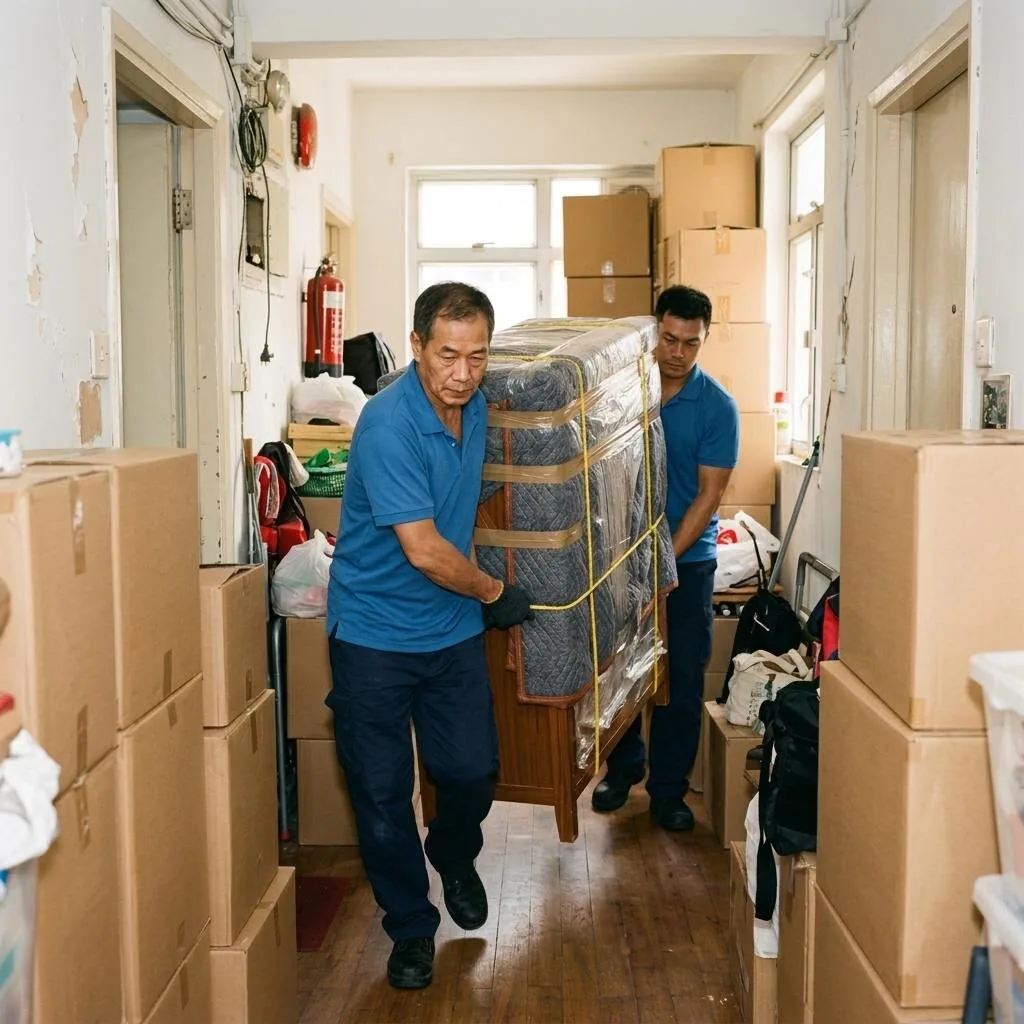
Some buildings require walking up from the street to a platform before reaching the lift, or changing to another lift midway. Photograph it section by section from the drop-off point, marking stairs, ramps, narrow sections and places where the team needs to stop and transfer items, instead of just writing "there is a lift".
- From the unloading point to the building entrance
- Along the designated route to the lift
- Check the corridor and entrance after exiting the lift
- Record the obstacles and restrictions at both the new and old properties
Confirm legal parking points and moving distance
Please check whether the loading area can be used, whether there are height restrictions or time restrictions for vehicles, and estimate the distance from the back of the truck to the entrance. Do not assume the truck can stop at the door for a long time, and do not arrange to block other vehicles or fire access routes.
Parking, carrying distance and other extras should be confirmed by the Company according to the actual site conditions. If the management office changes the location or route at short notice, please notify the Company in advance to recheck the procedures and charges; do not wait until the day of service to provide the missing information.
Check again before the move and keep the passage clear on the day
Before moving, confirm again lift maintenance, loading bay works and access arrangements, and prepare the management office contact details. Clarify in advance any flooring, door frames and lift areas that need protection, and do not assume any of them are automatically included.
On the day, let one person familiar with the arrangements check the route with the team, and keep other family members out of narrow areas to direct the move. If an obstacle differs from the original information, stop first and discuss a workable solution rather than forcing large items through.
Frequently Asked Questions
What information is still needed if there is a lift?
Provide the lift door and cabin dimensions, the turning space in front of the door, and the stairs, podium and transfer situation from the unloading point to the unit.
Will protective boards affect usable furniture space?
Yes. Assessment should be based on the actual clear space after protective materials are installed; do not remove handrails or lift fittings to create extra space.
Is a building's car parking space always suitable for a moving van?
Not necessarily. Check the height limit, unloading time slot, vehicle access and entry requirements first, then the Company will confirm the available location and route.
Do podiums and lift transfers need to be declared separately?
Yes. Please explain the location, distance and work process in each section. Do not just state that there is a lift; confirm the quotation scope according to the full route.
What if the lift needs maintenance on moving day?
Notify the company and the management office as soon as possible to confirm the workable arrangement and any adjustments needed. Do not simply switch to stair carrying for all items without assessment.