MOVING TIPS & ADVICE
Practical Guide to Moving Large Indoor Plants Safely
Key answers
For large indoor plants like fiddle leaf figs or bird of paradise, reduce watering, secure branches and pots, plan the route, and let the plant recover gradually in the new home to avoid breakage and stress.
Assess the plant first, then choose the moving method
The main risks are not only weight, but also overhanging foliage, loose soil, fragile pots, and tall crowns that can hit ceilings, door frames, or corners. Before moving day, measure the height, width, pot diameter, and weight, and note the plant's best display side so you can place it properly in the new home.
If the plant already has pests, overly wet soil, exposed roots, or a cracked pot, deal with those issues before moving. For especially tall or heavy plants, or cases that require door removal, tight turns, or stair carry-outs, ask the mover to confirm the route and feasibility in advance.
Reduce water and stop feeding before moving day
A few days before the move, gradually reduce watering according to the plant type and weather so the soil stays slightly dry but not parched. Stop fertilising at the same time, because the roots should not be stressed during transport. Drought-tolerant or thick-leaf plants and moisture-loving plants need different handling, so do not over-dry everything in the same way.
Remove weeds, dead leaves, and decorative stones from the pot surface to reduce loose debris. If the topsoil shifts easily, cover it lightly with paper or thin cloth and secure the pot opening with a loose film wrap that still allows some airflow. Avoid sealing the whole pot tightly for too long, or the plant may become stuffy.
Secure branches and the pot to prevent breakage
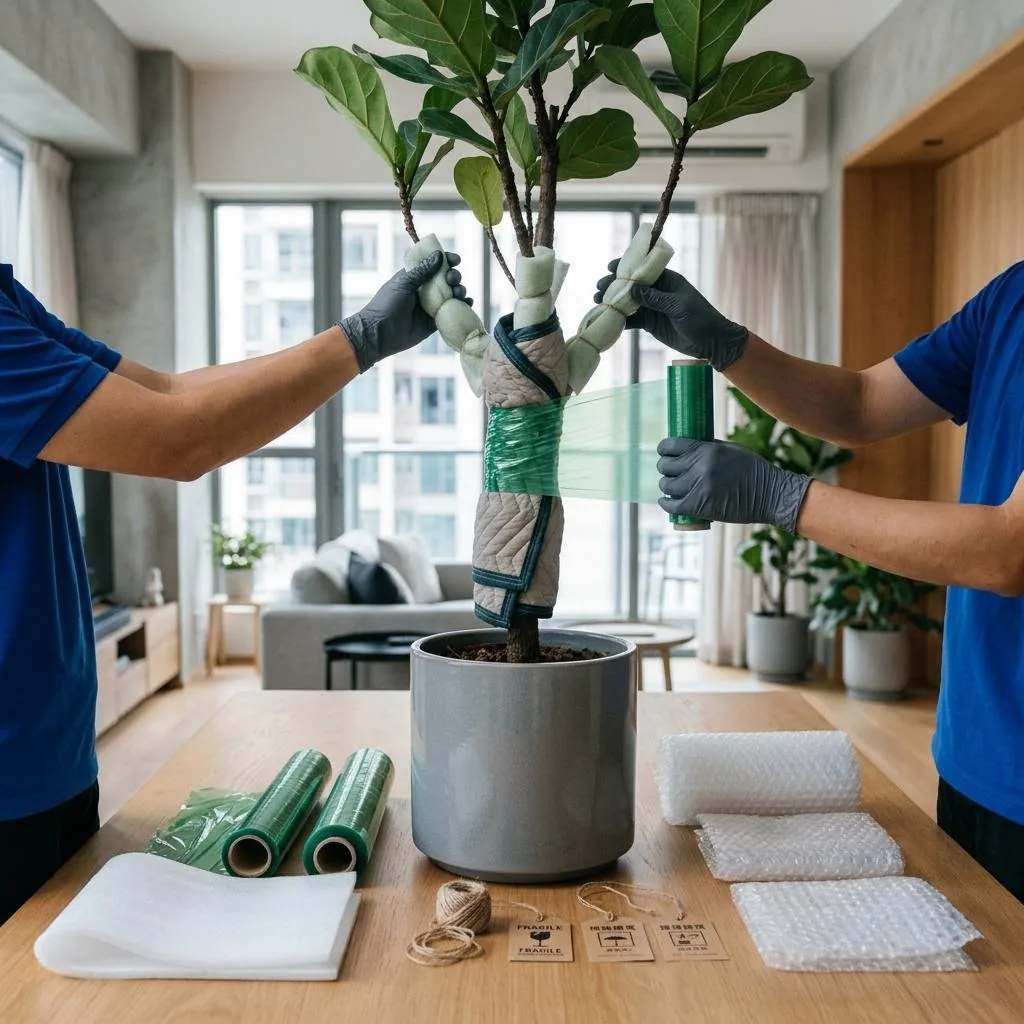
Use soft ties, cloth strips, or paper bands to gather the spread-out branches gently toward the center, following the plant's natural shape. For large leaves that tear easily, a simple cardboard shield can help against rubbing and impact. The goal is protection, not pressing the plant into a fully compressed bundle.
For ceramic, fiberglass, or thin plastic pots, check whether the outer shell is fragile. Wrap the outside with towels, thick cardboard, or bubble wrap, then secure it in place and add padding under the base so the pot stays stable when carried. If there is a separate saucer, handle it separately to avoid leaks or slipping.
Plan the vehicle layout and transit time carefully
Once on the truck, place the plant on a stable, low-vibration area, ideally near the side without letting it be crushed by hard items. Use straps or anti-slip padding to keep it from swaying during turns. Do not wedge it between boxes, furniture corners, or heavy objects, and never stack items on top of the canopy.
Hong Kong summers can make vehicle interiors extremely hot, so shorter travel time is better. Plan the most direct route and avoid unnecessary waiting. If there is an unavoidable stop, do not leave the plant in a closed vehicle for long periods. On rainy days, also watch for water splashes and muddy floors during loading and unloading.
Let the plant recover gradually after arrival
After arrival, do not remove every tie at once. Place the plant in a ventilated, draft-free area with gentle indirect light and check for broken stems, fallen leaves, cracked pots, or displaced soil. If you need to reposition it, confirm the floor is level first and then turn it slowly toward the preferred display angle.
Only then should you loosen the ties step by step and let the branches return to their natural shape. If the topsoil is dry, water lightly instead of soaking it. During the first few days, avoid strong direct sun, cold air blowing from the air conditioner, or very dry spots, and let the plant adapt first.
When to hire movers and what to confirm in writing
If the plant is large, heavy, expensive, or must pass through narrow corridors, stairs, or tight elevator corners, discuss it with the mover early. Tell them the plant type, dimensions, pot material, whether the saucer or stand needs removal, and whether there are stairs, thresholds, or parking limits at either address.
Before quoting, ask whether they have experience with large plants, whether you need to do the wrapping yourself, and how they handle a mismatch between the described plant and the actual item on moving day. Any arrangements involving elevators, door frames, wall protection, or floor protection should be confirmed in writing. For related services, see Box packing service, Residential moving services, and Online Quote.
Frequently Asked Questions
What should I prepare first before moving a large indoor plant?
Measure the plant and pot, check the pot stability, reduce watering gradually, stop feeding, and prepare soft ties, cardboard, and anti-slip padding. If the route is narrow or the plant is especially tall, confirm feasibility with the mover first.
Do I have to stop watering completely before moving day?
No. The aim is to avoid excess moisture and leakage, not to dry the plant out completely. A slightly dry soil condition is usually safer than a wet one, but each plant type needs different treatment.
Can I wrap the whole plant tightly and transport it like that?
Not for long periods. You can protect the pot and outer foliage, but keep some airflow. A fully sealed plant can become stuffy, trap moisture, or suffer leaf damage.
Should I water the plant heavily as soon as it arrives?
No. First place it in a ventilated spot with indirect light, inspect the condition, and then water lightly if needed. Heavy watering right away can slow root recovery.
What should I ask the mover before booking?
Ask whether they handle large plants, who is responsible for wrapping, how they deal with stairs and narrow spaces, any loading restrictions, and what happens if the plant size differs from the description. Ask for written confirmation of important points.


