MOVING TIPS & ADVICE
How to choose an office relocation service in Hong Kong
Key answers
For an office move, the key is not just price. Check the scope of work, building access rules, packing and labeling, delivery timing, and whether the quotation clearly states what is included.
Start with a clear scope of work
The biggest problem in an office move is an unclear scope. When the list is vague, desks, chairs, cabinets, partitions, meeting tables, printers and other items can all become surprise add-ons. When comparing quotes, ask exactly what is included, whether disassembly is covered, how many floors are involved, whether stairs are needed, whether temporary storage is required, and which items need special handling.
In Hong Kong office buildings, you also need to check management rules, lift booking windows, loading bay limits, parking time restrictions, and whether any move-in application documents are required in advance. Ask for written confirmation of the scope so there is no dispute on moving day.
Sort office equipment and documents by priority
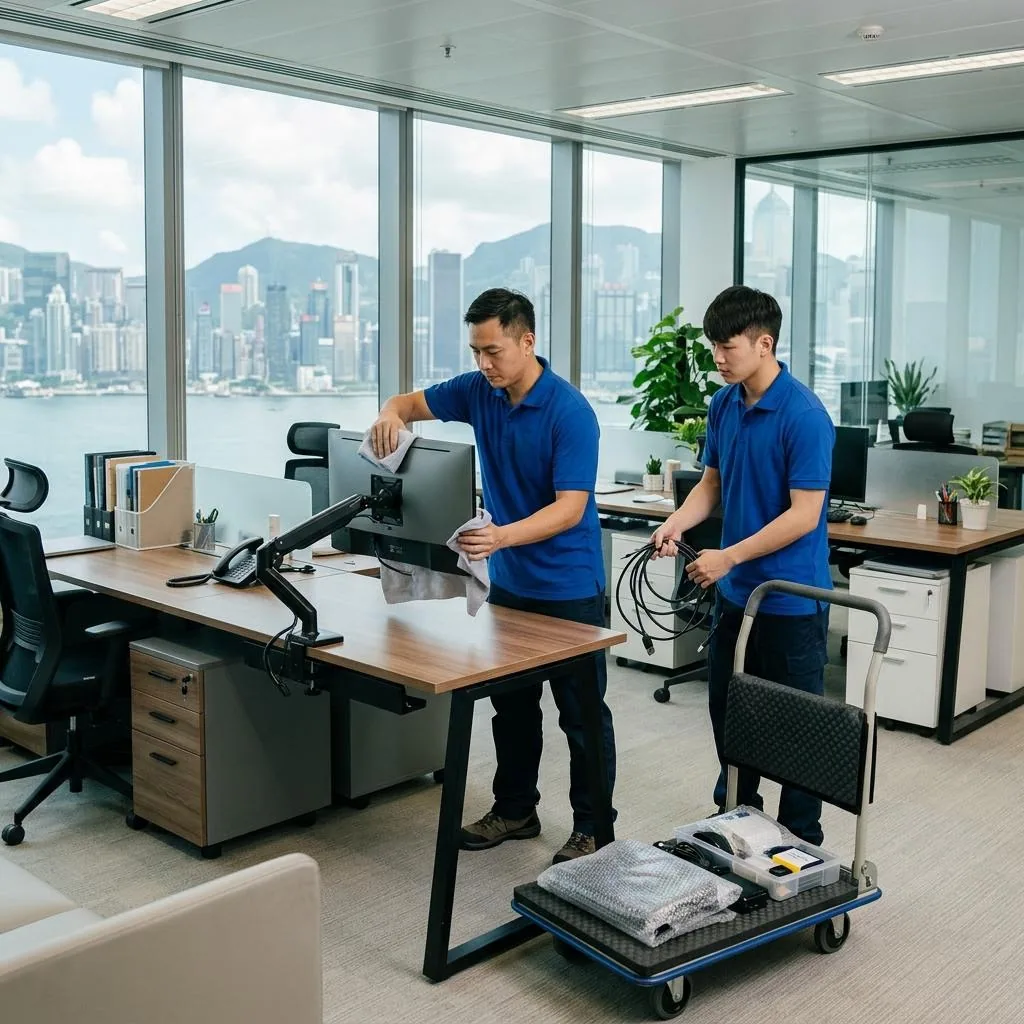
An office move is not only about furniture. It also includes computers, monitors, phones, routers, document boxes, samples and file cabinets. A practical method is to group everything into three categories: daily essential, can be moved later, and needs extra protection. Label every box clearly with the department, room, destination and priority so the new office can be set up faster.
Some items involve power, network, data, medical use or specialist systems, and these should not be dismantled or reinstalled by the moving crew. Use qualified technicians for those tasks first, then coordinate the relocation. If documents are confidential, decide who keeps the keys, who may access them, and whether the boxes should be sealed during transit.
Practical preparation before the move
Before moving day, remove items you no longer need so the workload and unpacking time are both reduced. Clear desks, drawers, filing cabinets and storage boxes in advance. Measure large furniture to check whether it can fit through lifts, corridors and doorways. If partitions or shelving units need to be dismantled, take photos first so the original layout can be restored more easily.
Also arrange the access route, security check-in, truck arrival time and the person who will receive the crew at each site. If the office is in a busy district such as Central, Causeway Bay or Kwun Tong, build in extra time for traffic, lift waiting and building procedures.
How to compare quotations and ask the right questions
When comparing office moving services, do not look only at the total price. Check whether the quote includes stairs, disassembly, packing materials, moving distance, night or weekend arrangements, waiting time and rescheduling. If the quotation shows only one lump sum, ask for an itemised breakdown; hidden extras usually cause disputes later.
Before confirming, ask whether the price changes with actual work, how overtime is charged, what happens if the service lift breaks down, and how rain or traffic restrictions are handled. Also confirm the cancellation or rescheduling terms and keep everything in writing. For insurance or compensation scope, check Service terms or request written confirmation.
Site management on moving day
On moving day, appoint one person to coordinate everything so the crew does not receive conflicting instructions. When the team arrives, confirm the item list, box numbers, furniture count and target locations, then decide what should be moved first and what can wait. Make sure the old office is fully checked for important documents and personal belongings before departure.
At the new office, inspect door frames, corridors, corners and floors for any marks or impact damage before the final placement is completed. After the furniture is positioned, test drawers, doors and castors to see whether anything is misaligned or loose. If there is damage, missing items or torn packaging, record it immediately and raise it on site.
What kind of company suits an office move best
For a small office, co-working space or an internal department shift, the main needs are punctuality, clear communication and proper document sorting. For a cross-district move with more furniture or multiple departments, you need a stronger process and better on-site coordination. The right choice depends on the size and complexity of the job, not just on company scale.
Use three filters: whether the mover gives clear answers about the scope, whether they are willing to review site constraints before quoting, and whether they can work around the building schedule. If you are still unsure, ask for a written quotation and a relocation plan first, then compare options. For older buildings, industrial buildings or village-house access, see Office relocation service, Tong Lau removal service or /guides/moving-timeline for more context.
Frequently Asked Questions
What should be confirmed first before an office move?
Confirm the scope, moving date, building restrictions, lift arrangements and item list first, then get written confirmation for any fragile or special items.
Can computers and network gear be handed straight to the movers?
General movers should not handle power, network, data or specialist system dismantling. Those tasks should be done by qualified technicians before the move.
How can delays on moving day be reduced?
Clear desks and drawers early, finish labelling, book the service lift, assign site contacts and leave extra time for traffic and waiting.
What should a quotation include?
It should state the items, floors, disassembly, packing, waiting time, overtime, rescheduling and any extra work, rather than only one total price.
What should be checked after arriving at the new office?
Check item counts, placement, walls, door frames, furniture function and packaging condition. Report any issues immediately to the person in charge.


