MOVING TIPS & ADVICE
Safe Moving Tips for Gaming Chairs and Viewing Sofas
Key answers
Gaming chairs and viewing sofas are bulky and have moving parts. Before a move, secure loose components, protect surfaces, plan for narrow access points, and check function again after delivery to reduce scratches, strain, and damage.
Check the structure and moving limits first
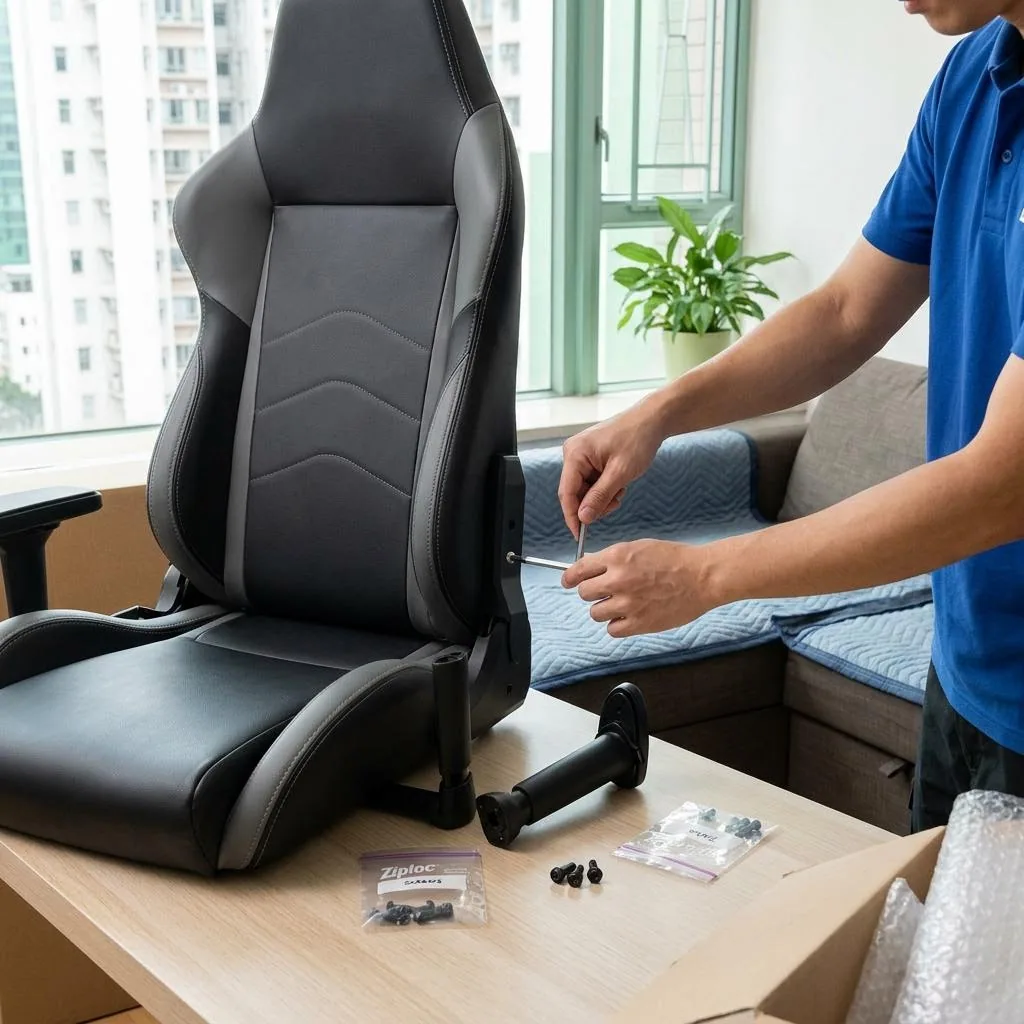
Gaming chairs and viewing sofas may look like ordinary seating, but inside they can contain gas lifts, adjustable armrests, reclining parts, motors, or metal frames. Before moving day, check the manual if you have it, or take photos of each part so you know what can be detached, what should only be folded back, and what must not be forced.
If the chair has a power cord, remote, battery pack, or external adapter, pack those items separately and label them clearly. When electrical parts or internal motors are involved, any disassembly or reconnection should be handled by a qualified technician rather than opened by hand, to avoid damage or safety risks.
Prepare the chair and protect the surfaces
Before moving, set the backrest, headrest, armrests, and footrest into the most stable position. Lock anything that can be locked, and remove detachable wheels or accessories only if the design allows it. If the wheels stay on, clean them first so dust or hair does not scratch walls or floors during passage through narrow areas.
For surface protection, wipe off dust with a soft cloth, then wrap leather, mesh, and armrest edges with a blanket, soft pad, or foam sheet. Add stretch film outside to hold everything in place, but do not tape directly onto leather or fabric, and do not use rough materials that may leave adhesive marks, pressure dents, or colour transfer.
Plan for corridors, lifts, and corners
The main problem is often not the truck, but the building access: door frames, corridors, lift entrances, and turning points. Measure the width of the doors, the inside of the lift, and any tight corners in advance so you know whether the item must be angled in, partly dismantled, or moved with two or more people at once.
If either address has an older building, stair-only access, a steep entrance, or a narrow stairwell, tell the mover in advance. Do not rush through tight spots; if the item jams, stop, reset the angle, and guide it again by hand. Forcing it through can put strain on the frame or damage the wall and trim.
Load and secure items properly in the truck
When loading, place the heavier and taller item first, then add lighter accessories and wrapped parts. Keep the furniture upright, or in the direction that preserves its normal load path, so armrests and footrests are not under long-term pressure. Leave some space around the item and keep hard tools or sharp-edged boxes away from the surface, because a sudden brake or turn can cause scratches or dents.
Use straps to steady the item against a firm point, but tighten them only enough to stop movement. If several items travel together, separate them with blankets, cardboard, or pads so they do not rub against each other. After a longer trip, check whether any outer wrap has loosened, torn, or become damp before unloading.
Reposition and inspect at the new home
After arrival, do not rush into full assembly or immediate long use. Remove the wrapping first, then inspect the exterior and the function step by step. Check whether the castors roll smoothly, the gas lift works properly, the armrests stay firm, and the sofa reclines and returns without unusual resistance. Also look for dents, tears, scuffs, or warped parts on leather, fabric, or wood.
If you notice noise, stiffness, leaning, or visible damage, take photos first and compare them with the pre-move condition before raising the issue with the mover. Do not open mechanical parts yourself, especially if the item has electrical components, a metal support structure, or a gas mechanism. Get a qualified repair person to assess it first.
How to choose the right moving team
When you ask for a quote, ask directly whether the company has experience with large seating, adjustable furniture, or motorised sofas. Confirm whether they provide pre-move assessment, protective packing, stair carrying, and repositioning at the destination. It is also wise to ask what the movers will handle and what you should dismantle yourself before arrival, so responsibilities are clear.
Check whether the quote includes floor-to-floor carrying, waiting time, difficult access, temporary transfer, or extra packing materials, and ask for written confirmation of the scope and limits. If the item involves electrical, structural, or specialist repair work, arrange that with the appropriate professional first, then book the move. For service details, see Box packing service, Residential moving services, and Moving house price list.
Frequently Asked Questions
What should I do first before moving a gaming chair?
Secure all moving parts, fold or lock the backrest and armrests, pack cables and accessories separately, and check whether the base or castors should be removed first.
Can a viewing sofa be moved flat on its back?
Usually that is not ideal for long periods, especially if it has electric or extending parts. It should stay in the normal load direction whenever the layout and access allow it.
Will leather or fabric get scratched during the move?
It can, so clean the surface first and wrap it with a soft blanket or foam layer. Keep tape off the upholstery and avoid rough materials that may leave marks.
What if the new home entrance or lift is too narrow?
Measure the access in advance and tell the mover early. The solution may be partial dismantling, angled carrying, or a changed moving sequence rather than forcing it through.
What should I do if the chair does not work properly after delivery?
Stop using it, take photos of the issue, compare the condition with before the move, and then ask the mover and a qualified repair person to inspect it.


