MOVING TIPS & ADVICE
Moving in During Rain and Wind: Three Moisture-Control Measures and Arrival Checks
Key answers
When rain or strong wind affects moving day, assess warnings, road conditions and loading access at both addresses first. Use waterproof outer protection, sealed box packing and shorter outdoor transfers to reduce moisture exposure. On arrival, count items, dehumidify, unpack in stages, and photograph any water damage or concerns promptly.
Assess Whether It Is Safe to Proceed Before Moving
One or two days before the move and again before departure, check Hong Kong Observatory weather warnings, rain radar and local road conditions. Confirm whether both addresses have covered loading areas, long outdoor walkways, slopes or walk-up staircases. Rainfall, gusts, visibility and carrying distance can all affect lifting and vehicle arrangements.
Do not decide to proceed solely by the name of a weather warning. If there is flooding, slippery outdoor access, a lift outage, unsafe truck parking, or large items would be exposed to rain for an extended period, contact the mover to reassess the timing, sequence or postponement. Before booking, review Service terms and request written confirmation for rescheduling, waiting, parking and any temporary storage needs.
Measure One: Create a Waterproof Outer Layer for Furniture
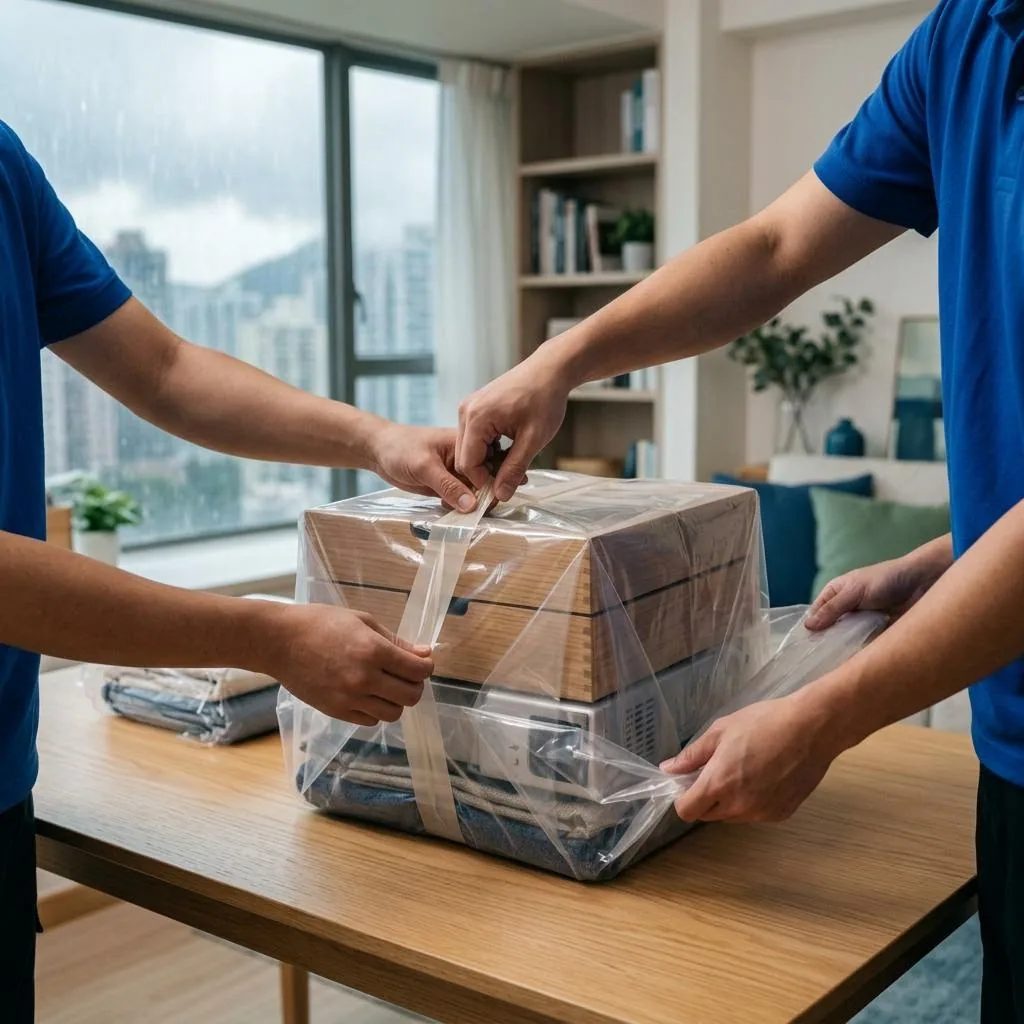
Wooden cabinets, sofas, mattresses and upholstered furniture are particularly vulnerable to direct rain exposure. Empty drawers and remove detachable parts first; use moving blankets or thick cardboard on impact-prone areas, then cover items with intact waterproof covers or tarpaulins. Secure seams, undersides and openings that may face upward during handling especially carefully. Waterproof protection should keep rain out, not seal damp items in for long periods.
Avoid wrapping already damp furniture only in thin plastic film, or covering items with a waterproof sheet that has been dragged on the ground. If an item gets wet, absorb surface water with dry cloths, keep it separate and arrange prompt drying. For solid wood, leather, antiques or items especially sensitive to moisture, seek care advice from the manufacturer or an appropriate restoration specialist.
Measure Two: Seal Items by Box and Handle Electrical Appliances Carefully
Use sound, dry cartons and reinforce their bases with crossed packing tape. Put clothing, documents, bedding and small items into resealable bags or waterproof inner bags before boxing, and clearly mark the room and “keep dry”. Do not overload cartons, as wet-weather conditions reduce their carrying strength and make failure more likely.
Switch off electrical appliances according to their manuals, unplug them and allow them to cool fully before securing them with original packaging or suitable cushioning. Never test a damp appliance by powering it on, and do not dismantle it to dry it yourself; if there is water ingress, an odour or suspected damage, have it checked by a qualified appliance repair professional. Explain packing materials and service scope to the mover in advance, and see Box packing service.
Measure Three: Reduce Time Spent Transferring Items Outdoors
Move the most moisture-sensitive items when there is direct access to the truck, lift or covered lobby, and clear temporary holding areas near doorways, corridors and lift entrances in advance. Do not stack cartons on the street or balcony early; group them by room and priority so they can go straight indoors when loaded and unloaded.
If rainfall intensifies temporarily, stop carrying items in exposed areas until conditions are safe rather than rushing workers to finish. When booking, accurately disclose floor level, lift dimensions, stair distance, village-house or tenement access, parking restrictions and large-item dimensions. This helps the mover propose suitable arrangements. Use Moving access size tool to organise access details beforehand.
Counting, Drying and Unpacking in the Right Order at the New Home
Once items are indoors, move cartons and large furniture away from wet floors and wall corners. Check the item count, damaged outer wrapping and obvious damp areas, and photograph anything unusual. If follow-up is needed, retain labels, lists and photos, and notify the relevant party promptly under the agreed service terms rather than discarding packaging before inspection.
On a rainy day, avoid leaving windows open for long periods and bringing humid outdoor air inside. Use air conditioning or dehumidifying equipment according to indoor conditions, maintain airflow, and avoid placing furniture tightly against walls. Once surfaces are dry, open clothing, books and fabric items box by box for inspection. Persistent dampness, mould or water seepage should be referred to building management, the landlord or a suitable waterproofing repair professional.
Points to Confirm with a Mover Before Booking
Provide the moving date, flexible time windows, both addresses, access restrictions, inventory and a weather-day contact method. Ask who makes on-site safety decisions in adverse weather, whether the sequence or date can be adjusted, and how any additional arrangements would be charged. Do not assume that waterproof packing, dismantling, storage or waiting time is included in every service.
Large pianos, safes, specialised equipment and items requiring regulated handling may need separate arrangements. If the handover date cannot move, keep a small set of essentials with you and consider short-term storage as a buffer. See Moving storage services for service options; the latest details on charges and terms should be checked at Moving house price list and Service terms.
Frequently Asked Questions
Must a move be postponed if a rainstorm or strong wind warning is issued?
Not necessarily. Consider the actual rain, flooding, road conditions, truck access, covered routes, lift operation and item types together. If carrying or driving is unsafe, pause or postpone first and obtain written arrangements from the mover.
Is putting plastic bags over cartons enough to protect them from rain?
It provides only short-term extra protection and does not replace dry, firmly sealed cartons that are not left outdoors. Use resealable inner bags for moisture-sensitive contents and keep carton bases off wet ground.
Can damp electrical appliances be switched on immediately for checking at the new home?
No. Keep them disconnected and deal with them only after they are fully dry in accordance with product instructions. If there has been water ingress, odour, condensation or abnormality, ask a qualified repair professional to inspect them.
Should furniture stay wrapped in plastic after being splashed by rain?
Do not keep damp furniture sealed for long, as moisture can be trapped inside. Absorb surface water first, move it to a dry, ventilated place, and use drying and care methods appropriate to its material.
How can risk be reduced if the property handover date cannot be changed?
Plan a shorter outdoor route, arrange a covered holding area, move moisture-sensitive items indoors first, and keep essentials with you. If a buffer is needed, ask the mover whether storage or phased arrangements can be accommodated and confirm the details.


